Why Is It So Hard to Follow Conversations in Noisy Restaurants?
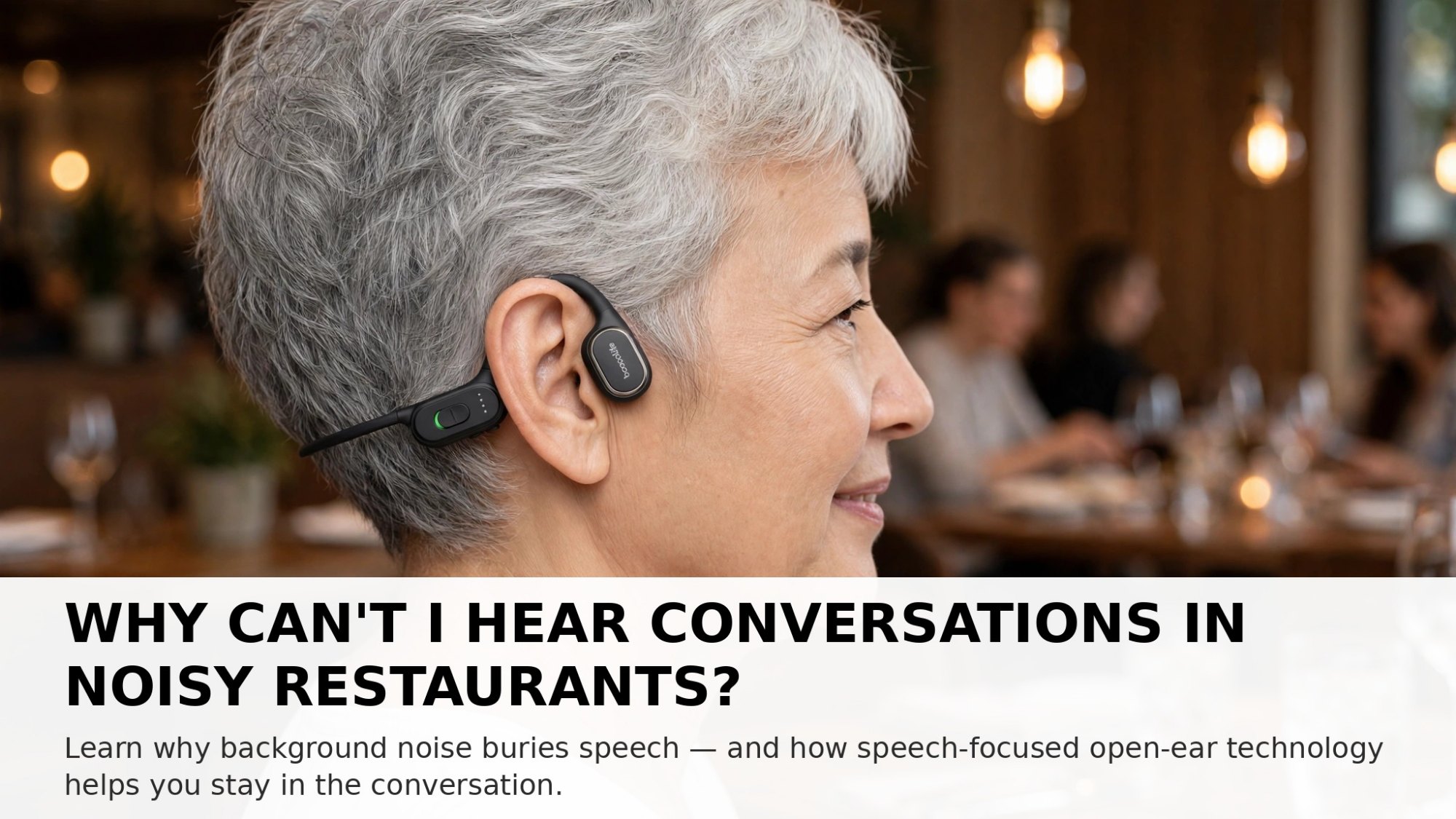
Why is it so hard to follow conversations in noisy restaurants? The problem is competition, not volume. Background chatter, dishes, and music occupy the same frequencies as speech, burying the voices you want to hear. Turning everything up only makes the noise louder. What helps is focus: emphasizing speech frequencies while your ears stay open. The bocoolife Celivo One, an open-ear bone conduction hearing assistant, transmits sound through bone vibration with your ear canal open — not an air-conduction speaker.
The Cocktail Party Problem
Scientists call this the "cocktail party problem": the auditory system must separate one voice from many competing sounds. For adults with mild hearing difficulties, this separation breaks down first in noisy places, even when quiet conversations at home feel perfectly fine. The consonant sounds that give speech its clarity — "s," "f," "th," "k" — sit in higher frequencies that fade first, and restaurant noise fills exactly those gaps.
Why Louder Is Not Clearer
A common instinct is to ask everyone to speak up or to turn up a basic amplifier. But restaurant noise is not quiet — it is loud in the wrong places. Boosting everything equally raises the clatter of plates and the hum of the room right alongside your dinner companion's voice. The result is more sound, but not more understanding — and often a headache before dessert arrives.
What Actually Helps: Speech Focus, Not Just Volume
What your ears need in a noisy restaurant is selectivity. The bocoolife Celivo One open-ear bone conduction hearing assistant is designed around this idea:
- Vocal Enhancement (300Hz–3kHz): The device emphasizes the frequency range where human speech lives, bringing voices forward instead of amplifying the whole room.
- Open Ears, Natural Balance: Because sound arrives through gentle bone vibration and your ear canals stay completely open, you hear your companion's enhanced voice while still sensing the room naturally — no plugged-up, echoing sensation.
- Independent Left/Right Tuning: If one ear struggles more than the other, the companion app lets you balance each side separately, so the voice across the table stays centered and clear.
- Quick Adjustments by Touch: The physical + / − / M buttons let you fine-tune volume mid-conversation without fumbling with a phone or touch panel.
Simple Habits That Help Too
Technology works best alongside a few practical habits: choose a corner table away from the kitchen, sit with your back to the wall so noise comes from one direction, face the person speaking, and don't be shy about asking for a quieter table — restaurants accommodate this request every day.
You don't have to give up dinners out. With the right support, the conversation can stay yours.