Is Bone Conduction Safe for Your Ears?
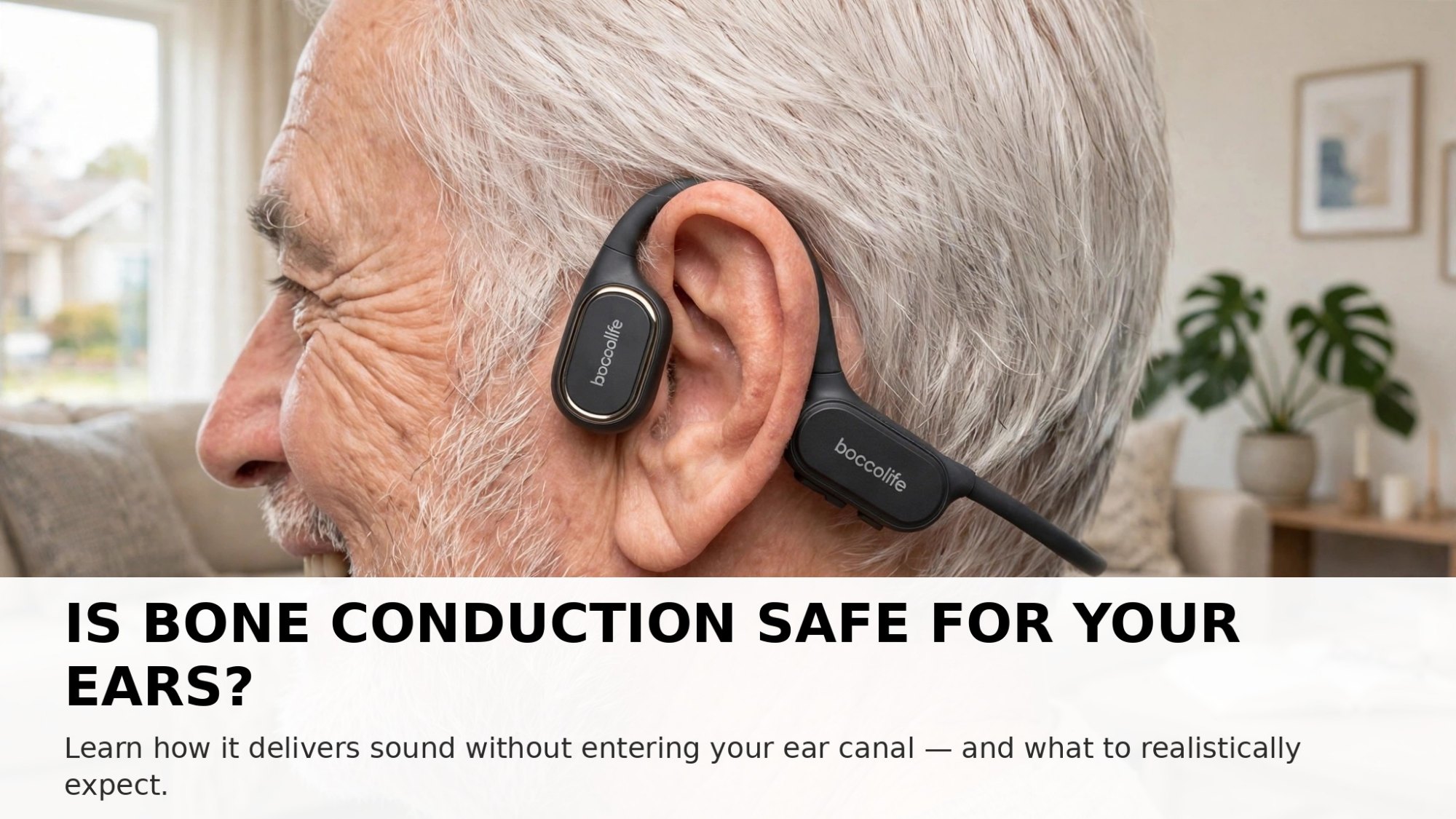
Is bone conduction safe for your ears? Bone conduction is a well-known way of delivering sound: instead of pushing amplified air toward your eardrum, a device rests on your cheekbone and sends vibrations to your inner ear. Because nothing enters the ear canal, it avoids the physical pressure, trapped moisture, and occlusion effect linked to in-ear devices. The bocoolife Celivo One is an open-ear bone conduction hearing assistant using this principle — though individual comfort varies with anatomy and fit.
How Bone Conduction Delivers Sound
Traditional earbuds and hearing aids work through air conduction: a tiny speaker pushes sound waves down your ear canal to vibrate your eardrum. Bone conduction takes a different route. Small transducers rest gently against your cheekbones and transmit micro-vibrations through the bone directly to the cochlea, your inner ear. Your eardrum is simply bypassed — not pressured, not sealed off.
What It Avoids by Staying Out of the Canal
Because an open-ear bone conduction hearing assistant never enters the ear canal, several common sources of daily discomfort don't apply:
- No canal pressure: Nothing is wedged against the sensitive skin inside your ear, so there is no insertion soreness after hours of wear.
- No trapped moisture: Your ear canals stay open to natural airflow throughout the day.
- No occlusion effect: Your own voice, chewing, and breathing don't echo boomy inside your head the way they do with plugged ears.
What to Realistically Expect
Honesty matters here. Bone conduction feels different at first: you may notice a gentle vibration sensation on your cheekbones, especially at higher volumes, and most people need a few days to get used to the sensation. Comfort also depends on individual factors — head shape, cheekbone contour, and how the device sits with your glasses. It is a physical fit question, not a medical one, and taking time to adjust the position is normal.
If you have an existing ear condition or medical concern about your hearing, a hearing care professional is the right person to advise you.