Why Are Phone Calls So Hard with Hearing Loss?
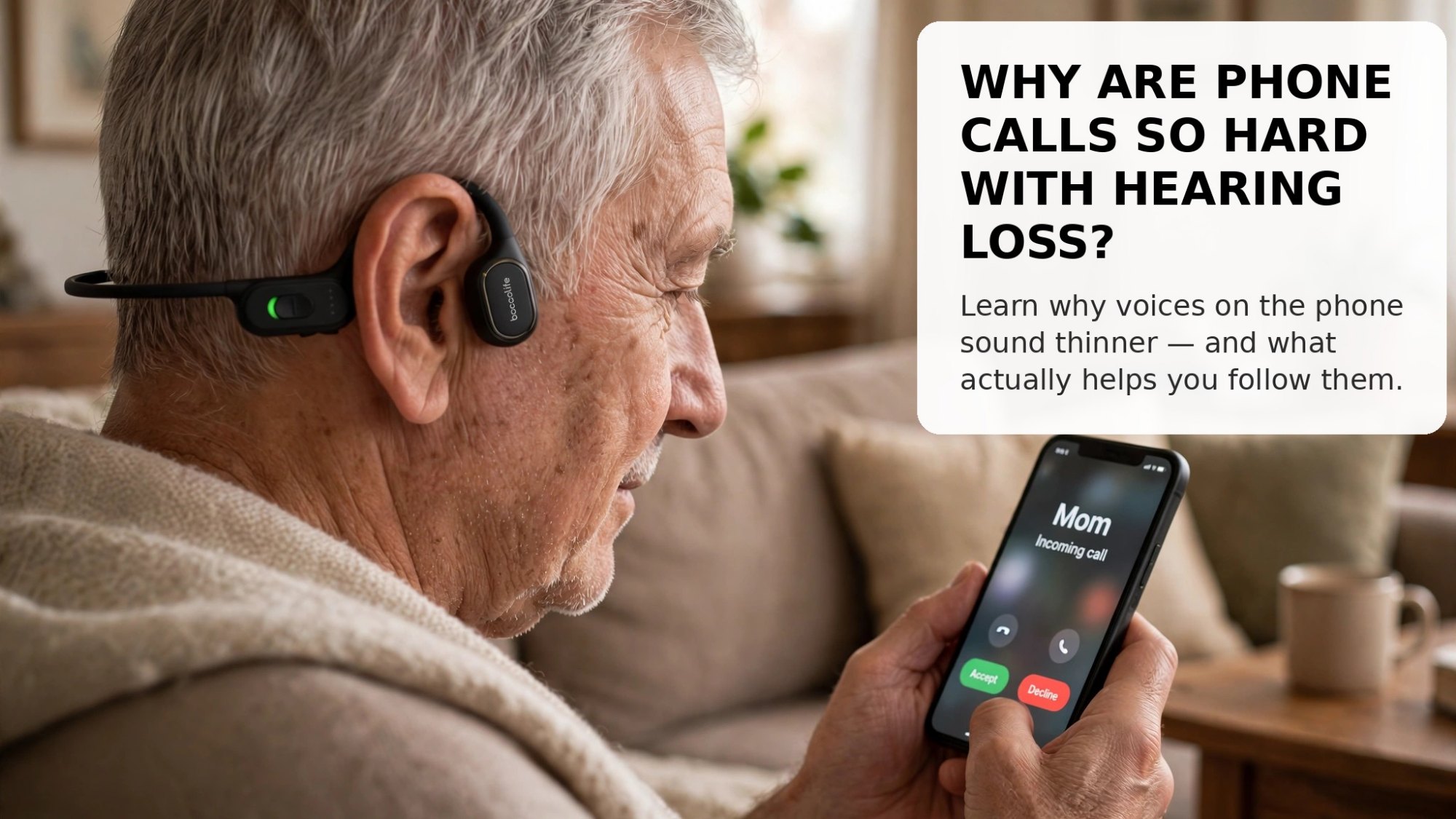
Why are phone calls so hard with hearing loss? On a call you lose every visual cue — no lip reading, no facial expressions, no gestures — so your ears must do all the work through a single narrow audio channel. Unfamiliar voices, fast speech, and background noise make it harder still. The bocoolife Celivo One, an open-ear bone conduction hearing assistant, transmits sound through bone vibration with your ear canal open — not an air-conduction speaker.
Why Calls Are the Hardest Listening Situation
In face-to-face conversation, your eyes do a surprising amount of the work: you read lips, watch expressions, and follow gestures without noticing. A phone call removes all of that at once. Add an unfamiliar voice, a fast talker, a strong accent, or a caller speaking from a noisy street, and the difficulty multiplies. There is also no way to control the other end — you can't ask the caller to face you, and you can't see when they are about to speak.
The Anxiety Loop
Many people with mild hearing difficulties start avoiding calls altogether: letting unknown numbers go to voicemail, asking family members to make the call instead, or dreading the moment they have to say "sorry, could you repeat that?" for the third time. The avoidance is understandable, but it also cuts off a basic way of staying connected — to family, to doctors' offices, to old friends.
What Actually Helps on a Call
What helps on a call is the same thing that helps in a noisy restaurant: speech focus, not just volume. The bocoolife Celivo One open-ear bone conduction hearing assistant is designed around that idea:
- Vocal Enhancement (300Hz–3kHz): The device emphasizes the frequency range where human speech lives, bringing the caller's voice forward instead of amplifying everything around you.
- Open Ears, Natural Balance: Because sound arrives through gentle bone vibration and your ear canals stay completely open, your own voice sounds natural to you — no plugged-up echo — and you can still hear the room around you.
- Independent Left/Right Tuning: If one ear hears better than the other, the companion app lets you balance each side, so the voice on the call stays centered instead of drifting to one side.
- Quick Adjustments by Touch: The physical + / − / M buttons let you adjust volume mid-call by feel, without looking at your phone or fumbling with a touch panel.
Practical Habits for Easier Calls
A few habits make calls noticeably easier: take the call in a quiet room with the door closed, tell the caller at the start that you hear better when they speak a little slower, use speakerphone in private when it helps, and consider a caption or transcription app for important calls like medical appointments. If a call matters, schedule it for a time of day when you feel fresh rather than tired.
Phone calls don't have to be something you dread. With the right support and a few simple habits, they can go back to being ordinary.