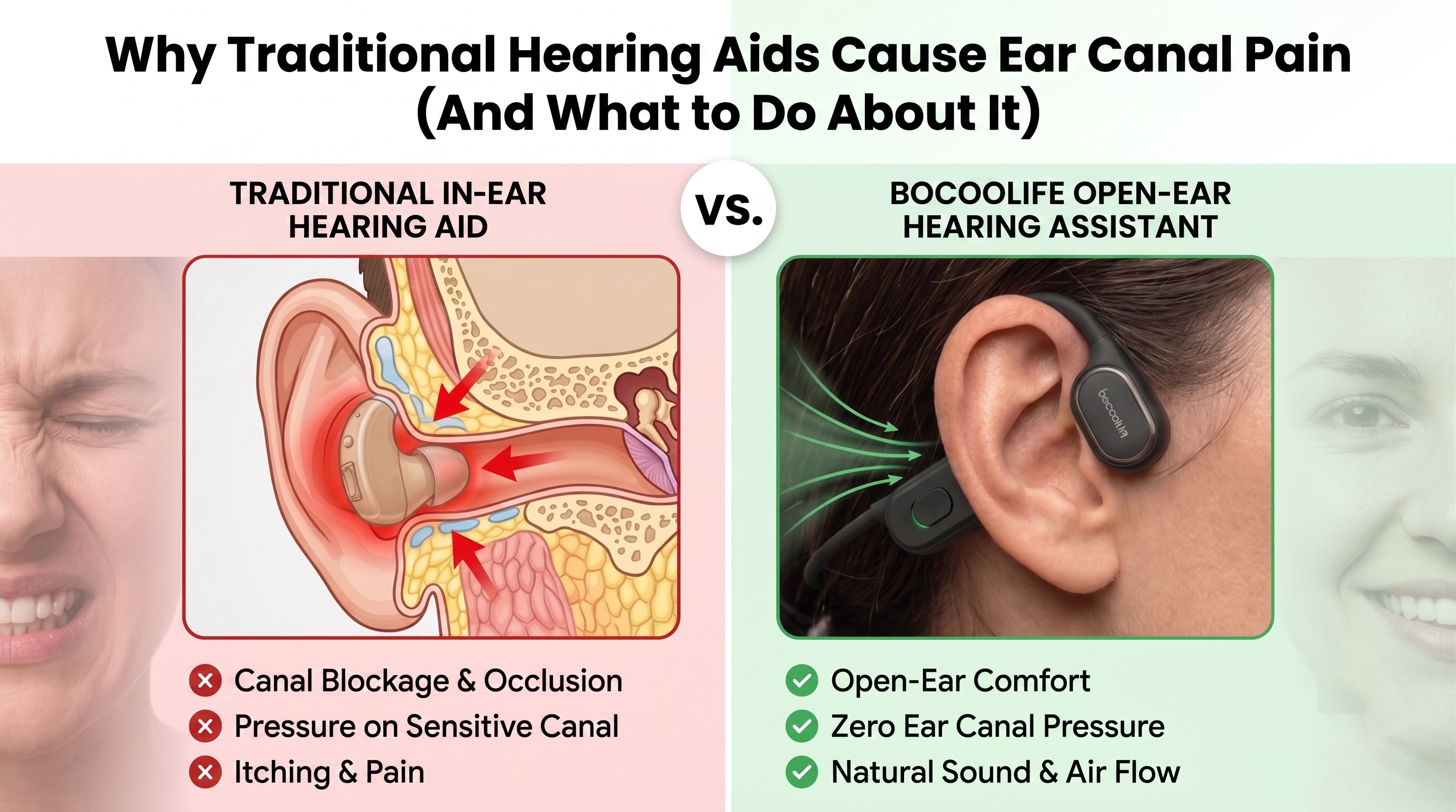
The Physical Burden of In-Ear Devices
For many adults who use conventional hearing devices, the hardest part of the day is not the sound — it is the physical discomfort. An acrylic mold or silicone tip sitting inside the ear canal for hours can lead to aching, a constant plugged-up feeling and sensitive skin.
If you often take your devices out just to give your ears a break, you are not alone. The cause is usually the physical design.
Why In-Canal Placement Leads to Discomfort
The ear canal has delicate skin and relies on natural airflow. Traditional hearing aids and personal sound amplifiers use air conduction, so they need a snug fit inside the canal to direct sound toward the eardrum.
That close fit creates a few everyday problems:
- Constant pressure: Friction and pressure against sensitive skin can cause soreness after several hours of wear.
- Trapped heat and moisture: Sealing the canal restricts airflow, so warmth and perspiration build up over the day.
- The "occlusion effect": With the ear plugged, your own voice, chewing and breathing can sound unnaturally loud and boomy.
The Bone Conduction Approach: Keep the Canal Open
The simplest way to avoid canal discomfort is to keep devices out of the ear canal altogether.
That is the idea behind bocoolife Celivo One. It is an open bone-conduction hearing assistant: sound travels by bone vibration, and the ear canal stays open. There is no air-conduction speaker plugging your ear.
- Nothing inserted: Because nothing sits inside the ear canal, there is no in-canal pressure and no trapped moisture.
- Natural airflow: Your ear canals stay open, so air keeps circulating through the day.
- Surrounding sound: You get support for everyday voices while still hearing doorbells, conversation and the room around you.
Comfort varies from person to person. If in-ear devices feel uncomfortable to you, an open bone-conduction design is worth trying — Celivo One comes with a 30-day money-back guarantee and free returns.